Guide 9 of 9
Damaged or lost freight: how truck cargo claims work under federal law
When a truck shipment arrives damaged, short or not at all, federal law sets the basic rules for who is liable and how a claim is handled. Here is the process, from the delivery receipt to the carrier's answer.
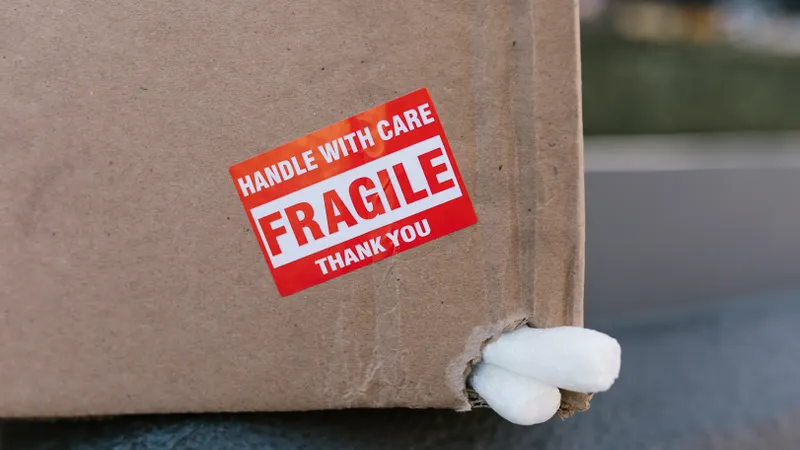
Most truck shipments arrive in good order, but when one does not, the rules for getting paid are set mainly by a federal statute and a short set of FMCSA regulations. This guide walks through them for interstate shipments by motor carrier. It is general information, not legal advice. For a large or disputed claim, a transportation attorney can tell you how the rules apply to your contract.
The law behind cargo claims
Carrier liability for cargo traces back to the Carmack Amendment of 1906, now codified at 49 U.S.C. 14706. It requires a carrier to issue a receipt or bill of lading for property it accepts, and it makes the carrier liable to the person entitled to recover under that document for the actual loss or injury to the property. The receiving carrier and the delivering carrier are liable, including for loss caused by another carrier over whose route the freight moved. Failing to issue a bill of lading does not erase that liability.
In a 2010 rulemaking, FMCSA described the Carmack Amendment as providing "first dollar" coverage to shippers for cargo loss or damage, meaning a carrier must compensate the shipper regardless of its own insurance deductibles, unless the shipper agreed to limit or waive liability.
The statute places this liability on carriers. If a broker arranged your shipment, find out which motor carrier actually hauled it. Brokers must keep a record of each transaction, and each party to a brokered transaction has the right to review it. Your broker agreement may also say how claims are handled.
Limits on what you can recover
Carmack liability can be limited. The statute lets a carrier set rates under which its liability is capped at a value established by the shipper's written or electronic declaration, or by written agreement, if that value is reasonable under the circumstances. These are often called released rates.
On request, a carrier must give you a copy of the rate, classification, rules and practices that apply to your shipment. Read them and the bill of lading before you ship, especially for high-value freight. If a cap would leave you short, ask about declaring a higher value or arranging separate cargo insurance.
At delivery: inspect, note and photograph
The delivery is where most claims are won or lost. Before you sign:
- Count the pieces against the bill of lading.
- Look for crushed, wet, torn or punctured packaging and broken stretch wrap or pallets.
- Write any exception on the delivery receipt in specific terms. A hypothetical example: "2 of 6 cartons crushed on pallet 3, contents not yet inspected."
- Take photos of the freight, the packaging, the labels and, if you can, the inside of the trailer.
- Keep the damaged goods and packaging so the carrier can inspect them.
A written exception is strong evidence, but it is not a claim. Under 49 CFR Part 370, notations of shortage or damage on freight bills or delivery receipts do not, standing alone, meet the claim filing requirements.
Refusing damaged freight is not a claim either. When freight is refused because of damage, the regulations require the carrier, after giving notice where practicable and unless told otherwise, to sell or dispose of it, directly or through a salvage agent, and to keep records of what it recovers.
Concealed damage
Concealed damage is damage you find only after the freight has been signed for and unpacked. These claims are harder, because a clean delivery receipt suggests the goods arrived in good condition. If you find hidden damage, stop unpacking, photograph everything, keep the packaging, and notify the carrier in writing as soon as possible with a request to inspect. Check the bill of lading and the carrier's rules for any notice requirements, since claims must be filed within the limits set by law, the contract of carriage and the applicable tariff.
Filing the claim
File with a proper carrier: the one that received the freight, the one that delivered it, the one that issued the bill of lading, or the one on whose route the loss occurred. Under 49 CFR 370.3, a claim is a written communication that:
- Contains facts sufficient to identify the shipment.
- Asserts liability for the loss, damage, injury or delay.
- Claims payment of a specified or determinable amount of money.
State an actual amount. If a claim is for an uncertain figure, such as "$100 more or less," the carrier may investigate but will not pay until a written claim for a specific or determinable amount is filed.
When needed for the investigation, a claim should be supported by the bill of lading, evidence of any freight charges, and the invoice or a certified copy showing the value. If the loss of an entire package or shipment cannot otherwise be confirmed, the carrier must get a certified statement from the consignee that the goods were not received from any other source.
Federal law says a carrier may not give you less than 9 months to file a claim. Your bill of lading may set the actual deadline, so check it and file well before it.
What happens next
| Step | Federal rule |
|---|---|
| Acknowledgment | Within 30 days of receiving the claim, unless the carrier pays or declines it in writing within that time |
| Investigation | Prompt and thorough investigation of each properly filed claim |
| Decision | Pay, decline or make a firm compromise offer in writing within 120 days |
| Delays | If not resolved in 120 days, a written status update with reasons, then again every 60 days |
| Lawsuit window | At least 2 years from the date the carrier gives written notice disallowing any part of the claim |
The acknowledgment should tell you what additional documents the carrier needs. Two details protect the lawsuit window: a settlement offer does not count as a denial unless the carrier states in writing that part of the claim is disallowed and gives reasons, and a letter from the carrier's insurer does not count unless it also says the insurer is acting for the carrier.
Keep copies of everything you send and receive, note the claim number the carrier assigns, and track the 120-day date. If the claim is denied and the amount is significant, get legal advice well before the 2-year window closes.
Sources
- Legal Information Institute, Cornell Law School: 49 U.S. Code 14706, Liability of carriers under receipts and bills of lading
- eCFR: 49 CFR Part 370, Principles and Practices for the Investigation and Voluntary Disposition of Loss and Damage Claims and Processing Salvage
- Federal Register: Cargo Insurance for Property Loss or Damage
- eCFR: 49 CFR 371.3, Records to be kept by brokers
This guide is general information about shipping freight by truck. It is not legal advice, and rules can change, so check the official sources above for your situation. TNW Trucking is an independent freight information resource. It is not a motor carrier or freight broker and is not affiliated with any trucking company of a similar name.